
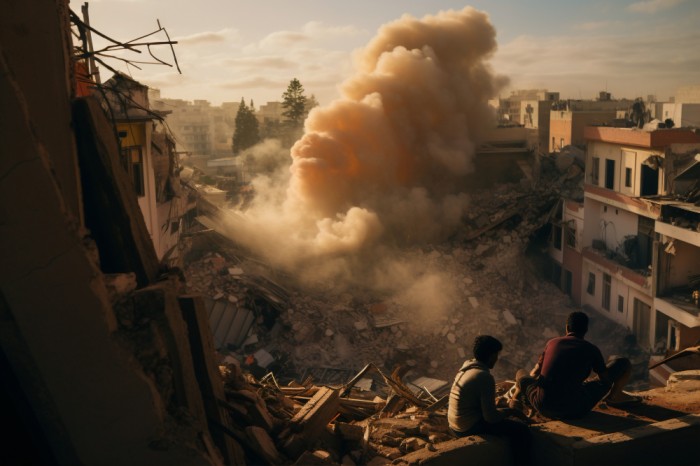
The growing discord between the United States and Iran has reached new heights following a series of mutual attacks, prompting fears of a broader conflict in the Gulf region. The US military recently announced that it had conducted strikes on Iranian military sites, targeting air defense systems, drone production facilities, and surveillance operations. This action was a direct response to an assault on a commercial vessel traveling through the Strait of Hormuz, a vital corridor for global energy shipments. US officials stated that their military response was necessary to address potential threats from Iran in this strategically significant waterway.
In retaliation, Iran’s Islamic Revolutionary Guard Corps launched missile and drone attacks aimed at US-affiliated military installations located in Kuwait and Bahrain. According to Iranian reports, these strikes hit several locations, including a US air base in Kuwait and a naval facility in Bahrain, though independent verification of these claims has not been made. Following the attacks, both Kuwait and Bahrain heightened security measures, detecting missiles and drones, and activating their defense systems. Authorities in these countries also advised residents to seek safety, highlighting the escalating tension in the region.
This exchange marks a significant escalation in hostilities, reminiscent of previous confrontations over the Strait of Hormuz, which remains a flashpoint in US-Iran relations due to its importance as an energy shipment route. The current situation threatens to unravel the tenuous ceasefire that had been in place between Washington and Tehran. The international community watches with concern as the potential for further conflict grows.
US President Donald Trump has accused Iran of breaching the ceasefire, cautioning that the US may take additional military steps should tensions persist. In contrast, Iran has placed the blame squarely on the United States, accusing it of inflaming the situation and not honoring past agreements. As both nations exchange accusations, the prospect of diplomacy seems increasingly uncertain, raising the stakes in an already volatile region.