
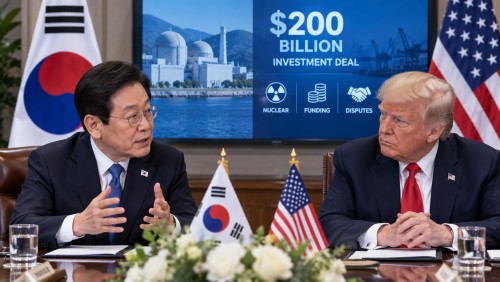
Amid ongoing discussions about South Korea’s ambitious $200 billion investment plan in the United States, significant hurdles remain, particularly in the realm of nuclear energy projects. The complexity of these negotiations has been underscored by differing views on nuclear reactor designs and financial commitments.
The core of the discord lies in the two countries’ approach to nuclear power collaboration. Plans to construct eight nuclear reactors in the U.S. have been complicated by a disagreement over technology choices. While six reactors are slated to utilize Westinghouse’s AP1000 design, South Korea has proposed using its own APR1400 technology for the remaining two. However, this suggestion has met resistance from both U.S. officials and Westinghouse, creating a roadblock in finalizing the nuclear component of the investment.
Further complicating matters, South Korea’s ambition to hold a 15% to 20% stake in Westinghouse, inclusive of voting rights and a board seat, has not aligned with Westinghouse’s preference to limit Seoul’s ownership to under 10%. This ownership dispute is indicative of larger issues concerning the balance of influence and control within the partnership.
Beyond nuclear projects, South Korea is contemplating involvement in other U.S. energy ventures, such as a project for processing spent nuclear fuel and a proposed liquefied natural gas project in Alaska. These potential investments are not without concerns, particularly regarding construction costs and the viability of long-term returns.
Timing and financial logistics also loom large over the negotiations. The U.S. has requested over $9 billion from South Korea by the end of the current year, whereas South Korea initially planned to contribute a smaller sum in 2026, scaling up investments in subsequent years. Moreover, the calculation of investment returns remains a contentious issue, with South Korea advocating for a model where profits from successful projects offset losses from less successful ones, contrary to the U.S. preference for separate accounting for each project.
Despite these challenges, both governments remain engaged in discussions, with South Korea’s Industry Ministry emphasizing that final decisions on specific projects and investment structures are yet to be determined. The ongoing negotiations reflect a complex balancing act as both nations seek to advance their strategic and economic interests through this substantial investment partnership.