
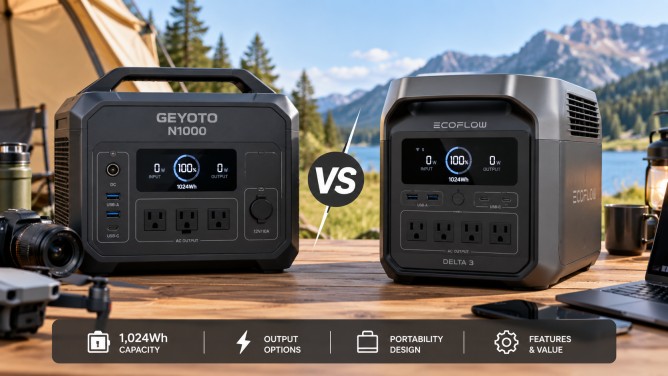
The GEYOTO N1000 and EcoFlow DELTA 3 Classic are two portable power stations, each offering 1,024Wh of battery capacity and designed to serve as reliable power sources for home backup, outdoor activities, and emergencies. Both units utilize LiFePO4 batteries and deliver a rated AC output of 1,800W, situating them within a similar performance tier. However, these power stations diverge significantly in terms of connectivity, solar charging capabilities, surge performance, portability, and support for vehicle applications. The GEYOTO N1000 is distinguished by its flexible connectivity options, wireless charging feature, vehicle support, and superior solar input capacity. In contrast, the EcoFlow DELTA 3 Classic excels in surge performance, portability, and integrates smart backup features.
When it comes to connectivity, the GEYOTO N1000 offers a more comprehensive suite of options. It includes four AC outlets, four USB-C ports capable of up to 140W, two USB-A ports, DC output, an XT60 connector, and a 25W wireless charging surface. This makes it particularly versatile for charging a wide array of devices such as laptops, phones, and cameras. Meanwhile, the DELTA 3 Classic provides six AC outlets along with USB-A and USB-C connections, catering to users whose primary needs involve AC power and basic device charging. Despite the number of ports, both models are bound by their 1,800W continuous AC output limit.
One significant distinction between the two models is their approach to wireless charging and vehicle support. The N1000 is equipped with a foldable 25W Qi2.2 wireless charging pad, allowing for the convenient charging of compatible smartphones without tying up a port. It also offers 12V DC vehicle power and a dedicated XT60 jump-start output rated at 12.6V/30A. On the other hand, while the DELTA 3 Classic lacks dedicated vehicle-side DC or jump-start features, it can be recharged from a vehicle through its charging input, making it a viable option for road trips and camping.
In terms of charging capabilities, both models support fast AC charging, with the N1000 reaching 80% charge in about 43 minutes and the DELTA 3 Classic in approximately 45 minutes under specified conditions. Solar charging is another area where the two differ, with the N1000 supporting up to 800W of solar input compared to the DELTA 3 Classic’s 500W. This higher input ceiling on the N1000 can be advantageous during extended outages or for off-grid applications using larger solar arrays. Additionally, the DELTA 3 Classic boasts a higher surge specification of 3,600W and can utilize its X-Boost function to support appliances up to 2,600W, benefiting those with higher temporary power demands.
Regarding portability and outdoor use, the EcoFlow DELTA 3 Classic is lighter, weighing around 12.1kg, which may be preferable for users prioritizing ease of transport. The N1000, at approximately 13.6kg, is designed with protective features for outdoor use and includes emergency lighting and SOS functionality. Both models offer approximately 10ms UPS transfer times for backup power, but the DELTA 3 Classic adds the EcoFlow Storm Guard feature for weather-alert charging. Ultimately, the choice between these power stations depends on the user’s prioritization of features such as connectivity, solar input, portability, and smart functionality.
Legal Disclaimer: The information contained in this article has been provided by independent third-party contributors, clients, or content partners. We do not independently verify the accuracy, completeness, legality, ownership, licensing, or reliability of submitted content, including text, images, videos, trademarks, or other media materials. The submitting party is solely responsible for ensuring that all content, including images and media assets, complies with applicable copyright, trademark, licensing, and intellectual property laws. We disclaim liability for any unauthorized use of copyrighted or proprietary materials by third parties. If you believe that any content published on this platform infringes your intellectual property rights, kindly contact the author above for prompt review and resolution.