
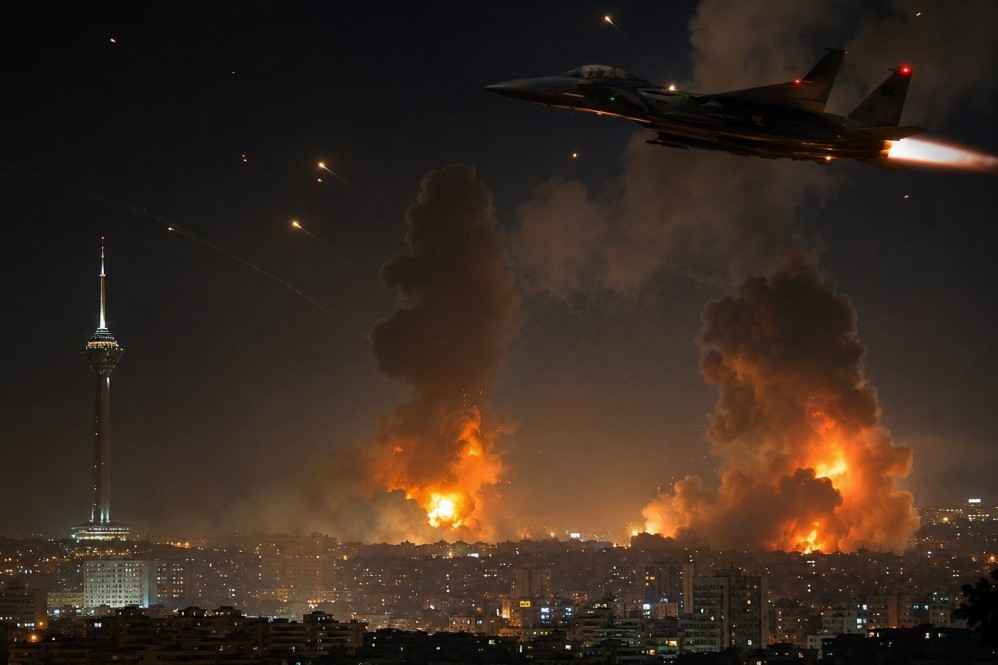
The United States has intensified its military engagement with Iran by conducting a third consecutive night of airstrikes. President Donald Trump has disclosed plans that include the enforcement of a maritime blockade on Iran and the imposition of a 20% tariff on cargo passing through the Strait of Hormuz, under the pretext of US-controlled security measures. According to the US Central Command, these airstrikes are intended to diminish Iran’s military strength and prevent potential attacks on commercial shipping and civilians in this strategically significant region. Trump emphasized that military operations would persist, with the US continuing to oversee security within the strait.
This escalation follows incidents involving two oil tankers from the United Arab Emirates that were reportedly hit by Iranian cruise missiles in Omani waters. These strikes resulted in the death of an Indian crew member and injuries to several others. The rising tensions have had a notable impact on global markets, with Brent crude oil prices climbing nearly 8%, highlighting increased concerns over the stability of global energy supplies.
Iran has vehemently opposed the proposed blockade, accusing the United States of jeopardizing international energy security by restricting maritime access. The Iranian government has warned of a strong retaliatory response to any such attempts. Additionally, international maritime authorities have pointed out that enforcing mandatory transit fees in international waters lacks a legal foundation according to existing international law.
The recent military aggression has sparked widespread apprehension about the possibility of a broader regional conflict. The ongoing attacks have already disrupted shipping routes, driven up oil prices, and injected further uncertainty into the global economy. Observers are closely monitoring the situation to ascertain the potential for escalation and its potential repercussions on international relations and economic stability.