
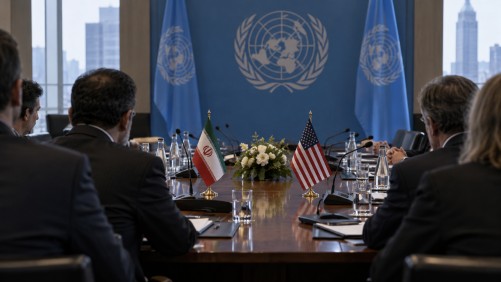
Tensions between the United States and Iran remain high as discussions continue over the future of the Strait of Hormuz, a vital waterway for global oil shipments. This strategic channel’s closure has exacerbated global energy market pressures. Amid these tensions, Iranian and U.S. officials engaged in talks, facilitated by Qatari diplomats, on the sidelines of the UN General Assembly in New York.
The discussions, lasting three hours, involved U.S. special envoy Steve Witkoff and Iranian Foreign Minister Abbas Araghchi. Witkoff characterized the talks as constructive and hinted at the possibility of future meetings. The central issue under consideration is Iran’s potential reopening of the Strait of Hormuz, contingent upon the United States taking steps to alleviate military and economic pressures on Tehran.
An Iranian official indicated that Tehran could reopen the Strait within a week if Washington shows readiness to ease military activity and sanctions. This move is seen as a gesture toward resuming negotiations, a prospect complicated by internal divisions within Iran. Although some Iranian figures show willingness to engage in dialogue, media outlets linked to the Islamic Revolutionary Guard Corps contest claims of a new diplomatic stance.
Amidst this backdrop, U.S. President Donald Trump addressed the UN, framing his choices as either reaching an agreement with Iran or intensifying actions against the nation. He reiterated the U.S.’s firm stance against allowing Iran to develop nuclear weapons.
The renewed diplomatic efforts come at a time when regional mediators are striving to broker negotiations between Washington and Tehran. The outcome of these talks could significantly impact not only U.S.-Iran relations but also the stability of international energy markets, given the strategic importance of the Strait of Hormuz.