
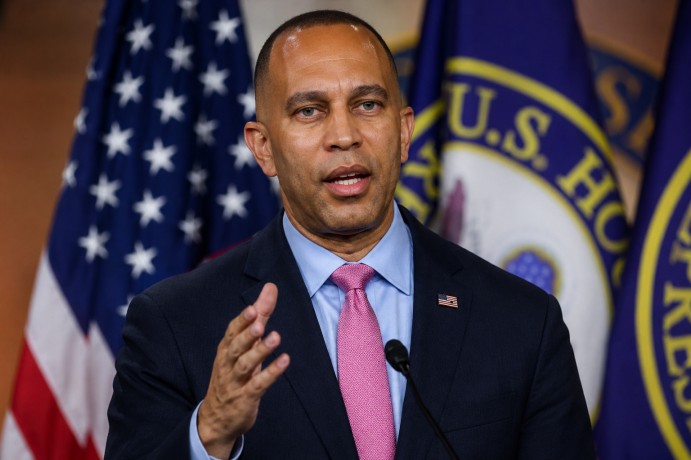
Amidst growing divisions within the Democratic Party over US support for Israel, senior House Democrats have voiced their opposition to a Republican-backed proposal that seeks to halt $3.3 billion in annual aid to the nation. The amendment, introduced by Republican Representative Thomas Massie, has been labeled “overly broad” by House Minority Leader Hakeem Jeffries, who warned that it might inadvertently hinder humanitarian efforts and weaken countermeasures against militant groups like Hamas and Hezbollah.
House Democratic Caucus Chair Pete Aguilar joined Jeffries in opposing the amendment, although he noted the necessity of reassessing US-Israel relations. According to Aguilar, Israel’s existing policies have contributed to its increasing solitude in the region, signaling a need for diplomatic reevaluation. While support for Israel remains a contentious issue, Aguilar’s comments reflect a growing sentiment among some Democrats that US foreign policy towards Israel requires careful reconsideration.
On the other side, Congressional Progressive Caucus Chair Greg Casar has called for support of the amendment, advocating for a shift in the Democratic Party’s approach to Israel and Palestine. Casar argues that US taxpayer money should not continue to fund Israel’s military activities, urging a reevaluation of longstanding policies. His stance underscores a broader debate within the party, as progressive lawmakers and constituents alike push for significant changes to US policy concerning the Israeli-Palestinian conflict.
The timing of this debate is critical, as it coincides with increased pressure from both voters and progressive members of Congress to reformulate US policy on Israel, especially in light of the ongoing conflict in Gaza. As the party grapples with these internal divisions, the issue of military aid to Israel has become a focal point of broader discussions on US foreign policy and human rights considerations.
Jeffries has also suggested a “major reset” in US-Israel relations, emphasizing Israel’s right to exist alongside advocating for the establishment of a Palestinian state. He has proposed that future US military assistance be contingent upon adherence to human rights standards and reflect Israel’s advancing capacity to support its defense needs independently. This stance highlights a potential shift in how some Democrats envision the future of US engagement in the region, aiming for a balance between security and ethical considerations.