
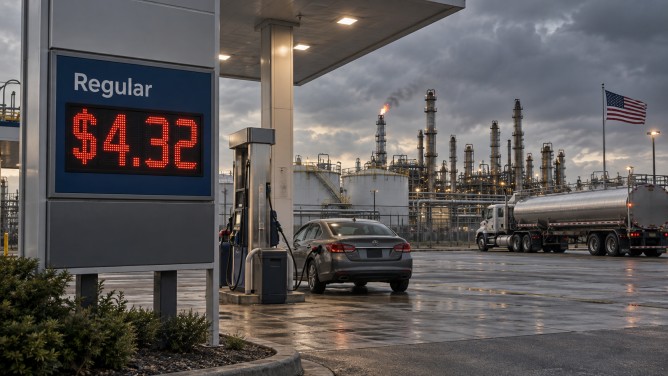
As global tensions and supply concerns weigh heavily on energy markets, the average price for regular gasoline in the United States has surged to $4.32 per gallon. This rise represents a notable jump of nearly 25 cents in just two weeks, according to data from the US Energy Information Administration. This sharp increase contrasts with the average price of approximately $3.18 at the same time last year.
The driving force behind the soaring gasoline prices is the volatility in the global crude oil market. Ongoing geopolitical conflicts, particularly those involving the Middle East, Iran, and Ukraine, have sparked fears of disruptions in oil supply, leading to increased energy costs worldwide.
The impact of these rising costs extends beyond gasoline. Diesel prices have also hit unprecedented levels, putting additional pressure on transportation and shipping sectors. The higher cost of diesel can escalate the expense of moving goods, potentially leading to broader inflationary pressures for consumers.
Typically, gasoline prices tend to decline in the fall as refiners transition from more expensive summer-grade gasoline to less costly winter-grade formulations. However, analysts caution that the prevailing geopolitical risks could prevent the expected seasonal decline this year.
Another factor contributing to the situation is the reduced capacity of the US Strategic Petroleum Reserve, which has seen significant withdrawals in recent years. This reduction could hamper the government’s ability to respond effectively to any substantial supply disruptions in the future.
With the energy landscape continuously shaped by developments in the Middle East and the ongoing conflict between Russia and Ukraine, analysts anticipate persistent volatility in fuel prices. While any seasonal reduction in gasoline prices might offer temporary relief, the underlying supply risks are likely to maintain elevated prices.