
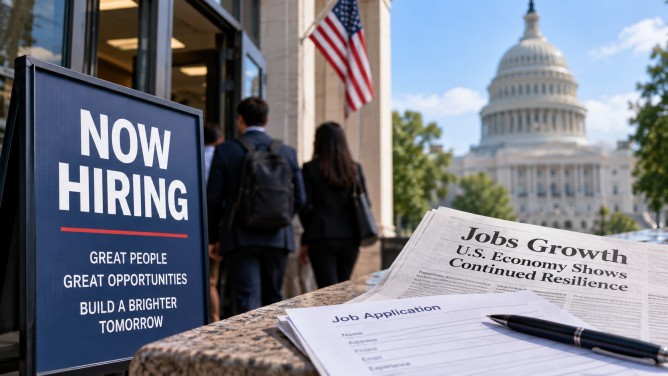
In August, the US labor market experienced a slight uptick, adding 162,000 jobs. This development comes after months of inconsistent job growth, underscored by a static unemployment rate of 4.1%. Earlier in the year, March saw 214,000 new jobs, but the pace slowed significantly to a mere 21,000 in July. While August’s job additions exceeded the predictions of economists, who anticipated around 50,000 new positions, they still highlight a broader trend of economic sluggishness.
Revised figures for June and July offer a more optimistic view of the summer’s employment landscape. Initially, June’s job growth was reported at 20,000, but has since been updated to 31,000. Similarly, July, which was initially reported as a loss of 23,000 jobs, has been revised to reflect a gain of 21,000 positions. Despite these upward adjustments and August’s improvement, the labor market’s momentum appears to be dwindling, particularly within the private sector, which added just 38,000 jobs in August, demonstrating businesses’ cautious approach to hiring.
The current job market has been characterized by economists as a “slow hire, slow fire” environment. This means that businesses are neither quickly expanding their workforce nor conducting widespread layoffs. Indicators such as stable job openings, consistent layoff rates, and a steady number of voluntary departures suggest that workers remain hesitant about their prospects of securing new employment opportunities.
Adding to the economic challenges is the issue of persistent inflation. US inflation, which stood at 2.4% in February, climbed to 3.4% by July, escalating the financial burden on households through increased living costs. Concurrently, rising bond yields have raised alarms over borrowing costs, with implications for mortgages, car loans, and student debt, thereby exerting additional pressure on consumer finances.
The Federal Reserve finds itself in a delicate position, striving to balance the dual objectives of curbing inflation and fostering employment. While raising interest rates could potentially reduce inflation to the target of 2%, such measures risk further cooling an already tepid labor market. Amid these economic challenges, President Donald Trump continues to advocate for lower interest rates, contending that cheaper borrowing could bolster the US economy.