
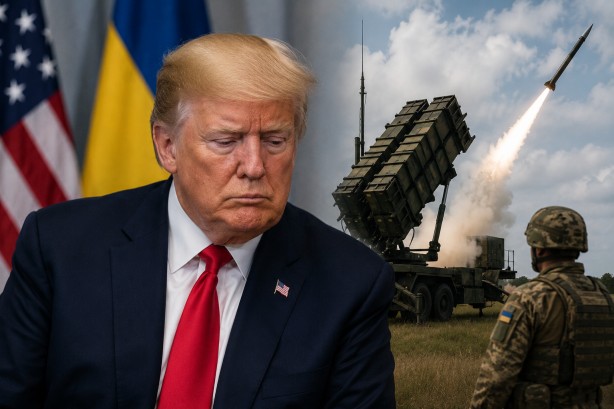
During a recent cabinet meeting held at Camp David, U.S. President Donald Trump clarified his stance on the potential for Ukraine to produce Patriot air defense interceptors domestically. Despite previous discussions suggesting a collaborative effort with Ukrainian President Volodymyr Zelenskyy, Trump emphasized that the transfer of such advanced military technology is still under deliberation and has not been sanctioned. He highlighted the complexities involved, describing the sharing of Patriot missile technology as a challenging decision due to the risk that these sophisticated defense systems might eventually be turned against the United States.
Trump’s latest remarks represent a notable departure from his earlier position, where he had floated the idea of local production of Patriot systems as a possible area of cooperation with Ukraine. This pivot in policy underscores the administration’s cautious approach towards international military technology sharing, with strategic considerations taking precedence over broader collaborative intentions.
The President further indicated a shift in focus towards ramping up the domestic production of Patriot and Tomahawk missile systems. This decision is seen as a move to bolster the United States’ own defense capabilities amidst ongoing global shortages of advanced interceptor missiles. The emphasis on enhancing the U.S.’s missile production capacity comes at a time when Ukraine is actively seeking to enhance its air defense systems in response to persistent military challenges.
Kyiv, which has consistently advocated for increased deliveries of Patriot systems and the capacity to manufacture them locally, might find the President’s comments concerning. The ability to produce these systems within Ukraine is viewed as a critical component in strengthening its air defense capabilities. As Ukraine navigates its defense strategy amidst regional tensions, the outcome of these discussions will be closely monitored by both Ukrainian officials and international observers.