
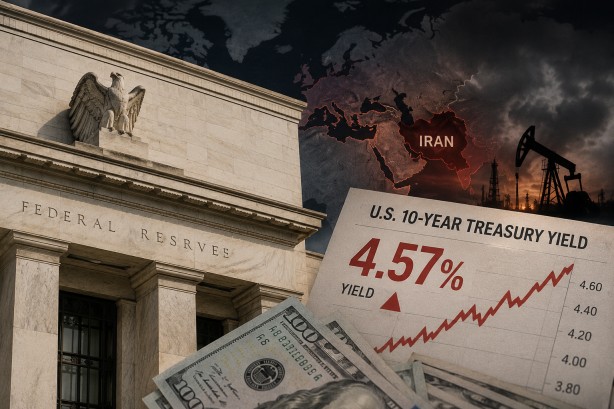
The cost of borrowing for the U.S. government has surged to levels not seen since 2007, following the Federal Reserve’s recent decision to maintain its current interest rate. This move by the Fed reflects ongoing concerns about inflation that continues to affect the economy. The announcement led to a wave of unease among investors, resulting in significant drops in key U.S. stock indexes.
Investor anxiety was further exacerbated by rising geopolitical tensions, as the United States conducted new military strikes on Iranian targets. These actions were in response to earlier attacks on American forces stationed in Jordan, which have contributed to an intensification of conflict in the Middle East. The situation has also stirred markets, with Brent crude oil prices climbing past $88 per barrel, which analysts warn could drive up energy costs and contribute to global inflationary pressures.
The interplay of these factors—higher interest rates, geopolitical instability, and surging oil prices—is creating a volatile environment for financial markets. Analysts are noting an increase in pressure on these markets, as fears grow about the broader implications for the global economy.
Concerns over inflation have been a persistent theme in economic discussions, influencing the Federal Reserve’s cautious approach to adjusting interest rates. By holding steady on rates, the Fed aims to control inflation while balancing the risks of economic slowdown.
With the Middle East conflict and fluctuating oil prices adding layers of uncertainty, financial markets are bracing for potential challenges ahead. The combination of these dynamics is prompting a reassessment of economic outlooks and strategies as stakeholders navigate an increasingly complex global landscape.