
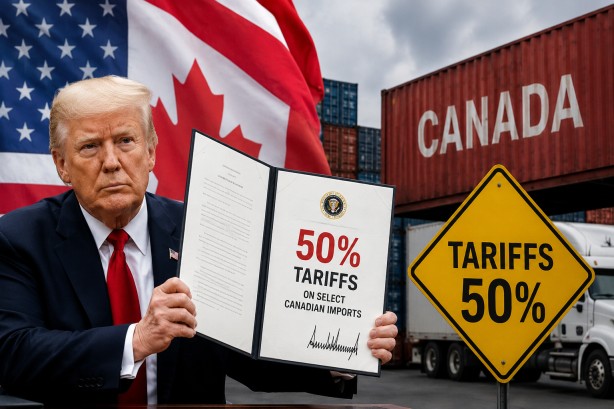
In a move that could intensify trade tensions between the United States and Canada, President Donald Trump has sanctioned the implementation of 50% tariffs on certain Canadian imports. This decision comes as a response to what the Trump administration perceives as Canada’s biased treatment of U.S. goods, notably affecting sectors such as automotive materials, dairy products, and alcoholic beverages.
The newly imposed tariffs were enacted through a series of executive orders, highlighting their importance amid the ongoing negotiations structured by the United States-Mexico-Canada Agreement (USMCA). The administration has justified this measure as a necessary action to counter what it considers unfair trade practices that have adversely impacted American industries.
As the U.S. and Canada continue their discussions on trade and market accessibility, these tariffs are anticipated to exert additional pressure on bilateral negotiations. The Trump administration hopes that these economic measures will prompt Canada to reconsider its trade policies and foster a more balanced trading environment.
The imposition of these tariffs is likely to complicate economic relations between the two neighboring countries further. The business community and exporters on both sides of the border are closely monitoring developments, particularly Canada’s response and the broader implications for trade within the North American region.